
By Mujasi Siragi Mubajje
Amuru District has received a consignment of medical supplies to strengthen Ebola prevention and response efforts. The donation was made by Direct Aid Society, which supports disaster relief and vulnerable communities in Uganda.

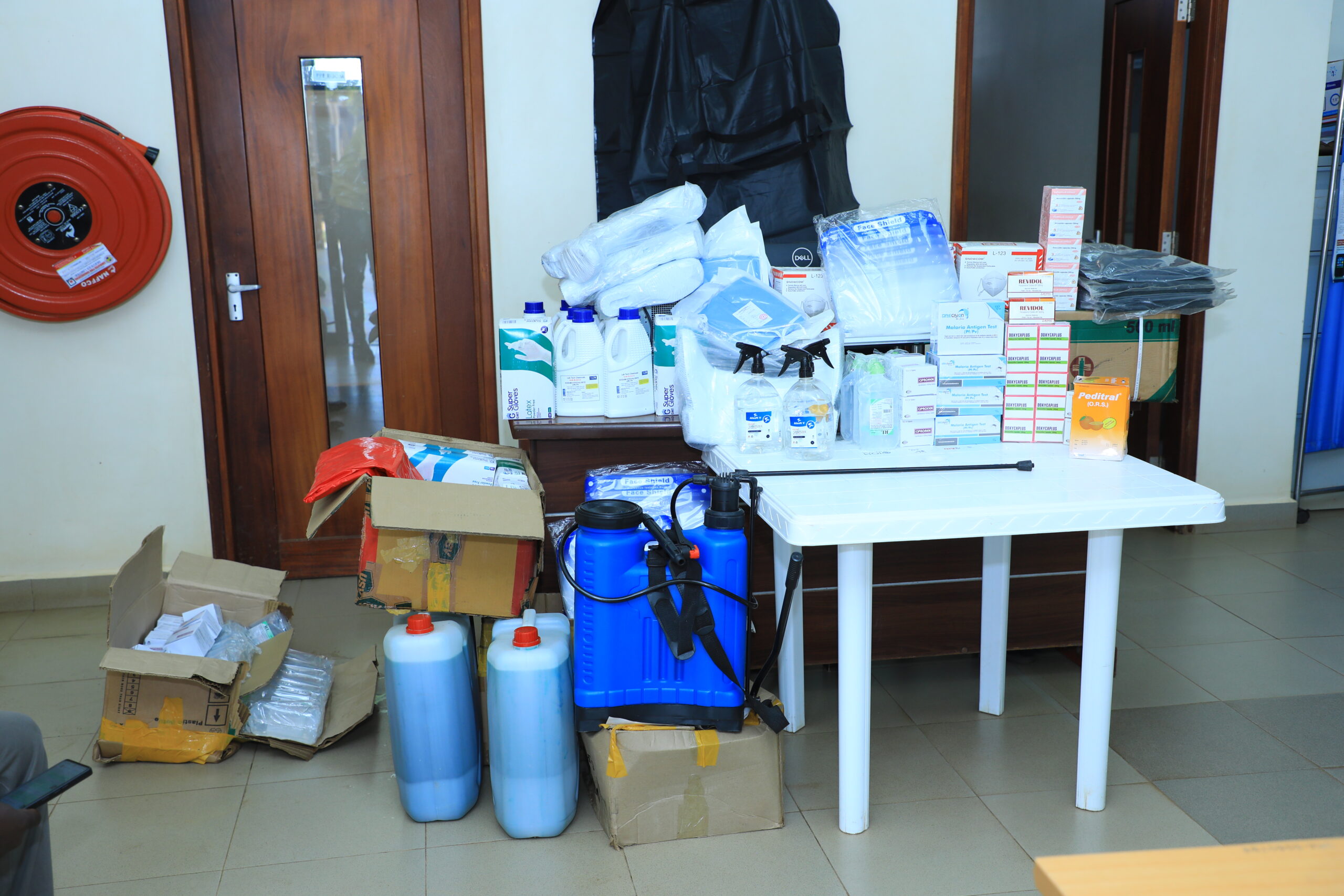
The supplies include assorted medicines, personal protective equipment, community sensitization materials, logistics support, and handwashing facilities.

Resident District Commissioner Geoffrey Orsbon Oceng, who also chairs the District Ebola Taskforce, received the items on behalf of the district.
Many health workers in the district have been operating without adequate protective equipment and essential supplies needed to prevent the spread of Ebola. We thank Direct Aid Society for this timely support,” Oceng said.
Dr. Hamza Makumbi, Health Care and Relief Officer at Direct Aid Society, said the intervention is aimed at supporting government efforts and improving preparedness in communities at risk.
According to the Ministry of Health, Uganda has recorded a cumulative total of 20 confirmed cases of the rare Bundibugyo strain of Ebola. The cases include 15 imported and five secondary transmissions. The outbreak has resulted in two deaths and 15 recoveries. Most cases have been linked to individuals crossing from the Democratic Republic of Congo in search of medical care.
Lamot Patrick Louis, Cross Border Focal Point Person, Elegu Port Health said the new supplies will help frontline facilities enforce infection prevention measures, protect health workers, and scale up community awareness.

Lamot noted that Direct Aid previously provided flood relief and medical camps for over 500 households at Elegu, and supported the 2025 cross-border cholera response for over 100 cases. He commended the organization and its donors for consistently bridging critical surveillance and healthcare gaps for vulnerable border populations.
He emphasized and appealed to Partners and Government to put more efforts in strengthening cross border health issues, saying diseases of international public health concern with recurrent outbreaks have been destabilizing the region. Therefore, having fully fledged border health units shall be the ideal solution to curb such outbreaks from transmitting through the borders, and affecting livelihoods, promoting safe migration and trade.
